
Apr . 01, 2024 17:55 Back to list
Tube Mill Supplier Performance Analysis
Introduction
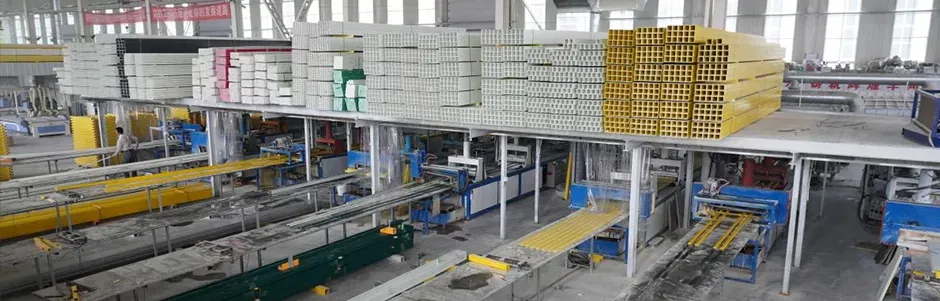
Tube mills represent a critical component within the metal forming industry, specifically dedicated to the high-volume production of welded steel tubing. As a tube mill supplier, our role extends beyond simply manufacturing equipment; we provide integrated solutions encompassing process expertise, mechanical engineering, and automation technologies. Tube mills are positioned between the raw material input (typically steel coils) and the finished product, supplying various industries including automotive, construction, oil & gas, and furniture manufacturing. Core performance metrics revolve around dimensional accuracy, weld seam integrity, production rate (meters per minute), material utilization, and operational reliability. A key pain point for end-users is achieving consistent weld quality across varying steel grades and thicknesses, directly impacting structural integrity and downstream processing costs. Another significant challenge is minimizing material waste during the forming and welding processes, particularly with high-strength alloys.
Material Science & Manufacturing
The primary raw material for tube mill production is steel coil, with variations including carbon steel (AISI 1018, 1020), alloy steels (4140, 5140), and stainless steels (304, 316). Material properties significantly influence weldability, formability, and final product strength. Carbon steel offers good weldability but limited corrosion resistance. Alloy steels provide enhanced strength and toughness but require careful control of pre-heating and post-weld heat treatment to prevent cracking. Stainless steels offer excellent corrosion resistance but can present challenges in welding due to high thermal conductivity and potential carbide precipitation.
The manufacturing process begins with coil decoiling and strip leveling to remove any inherent coil set. The strip then passes through a series of forming rolls that progressively shape it into a circular tube. This forming process relies on controlled plastic deformation, dictated by roll geometry, speed, and lubrication. Key parameters include roll pass design, reduction percentage per stand, and inter-pass tension. Subsequently, the formed tube is welded using primarily Electric Resistance Welding (ERW) or High-Frequency Induction Welding (HFI). ERW utilizes direct current resistance heating to fuse the edges, while HFI employs electromagnetic induction. HFI generally achieves higher welding speeds and produces a more refined weld seam. Following welding, the tube undergoes sizing, straightening, cutting to length, and non-destructive testing (NDT) – typically eddy current testing – to ensure weld seam integrity and dimensional accuracy. Quality control at each stage is paramount, involving rigorous dimensional checks, weld inspection, and mechanical testing.
Performance & Engineering
The performance of a tube mill is inherently linked to its structural integrity and the precision of its components. Force analysis is crucial in designing the forming stands and weld seam units, accounting for the substantial forces involved in plastic deformation and welding. Finite Element Analysis (FEA) is frequently employed to optimize component geometry and minimize stress concentrations. Environmental resistance is also a critical consideration, particularly for mills operating in harsh climates. Corrosion protection measures, such as protective coatings and corrosion-resistant materials, are essential to prevent degradation of the mill structure. Compliance with industry standards is non-negotiable. For example, API 5L (Specification for Line Pipe) dictates stringent requirements for dimensional tolerances, mechanical properties, and weld quality for tubes intended for oil and gas pipelines. ASTM A53 (Seamless and Welded Steel Pipe) covers a broader range of steel pipe applications. Functional implementation details, such as the control system architecture and automation level, directly impact production efficiency and product consistency. Modern tube mills often incorporate Programmable Logic Controllers (PLCs) and Human-Machine Interfaces (HMIs) for precise process control and real-time monitoring.
Technical Specifications
| Parameter | Unit | Typical Range (Carbon Steel) | Typical Range (Stainless Steel) |
|---|---|---|---|
| Tube Diameter | mm | 19.1 – 406.4 | 6.35 – 219.1 |
| Wall Thickness | mm | 0.8 – 25.4 | 0.4 – 6.35 |
| Production Speed | m/min | 20 – 120 | 10 – 80 |
| Steel Grade | - | AISI 1018, 1020, A53 Gr.B | 304, 316L |
| Welding Method | - | ERW, HFI | HFI (preferred) |
| Strip Width | mm | Dependent on Diameter & Thickness | Dependent on Diameter & Thickness |
Failure Mode & Maintenance
Tube mill failure modes are diverse, stemming from mechanical wear, electrical malfunctions, and metallurgical issues. Fatigue cracking in forming rolls is common, particularly under high load and frequent starts/stops. Delamination of weld seams arises from insufficient fusion or the presence of inclusions. Degradation of weld rolls due to heat cycling and abrasion is also frequent. Oxidation and corrosion of mill components, especially in humid environments, can lead to reduced performance and premature failure.
Preventative maintenance is crucial. This includes regular inspection of forming rolls for wear and cracks, lubrication of bearings and gears, calibration of sensors and control systems, and inspection of weld seam units for damage. Non-destructive testing (NDT) – ultrasonic testing and magnetic particle inspection – should be employed to detect subsurface cracks in critical components. Weld seam quality should be routinely monitored using eddy current testing. Roll grinding or replacement is necessary when wear exceeds acceptable limits. Electrical components should be inspected for loose connections and insulation breakdown. Implementing a comprehensive maintenance schedule based on operating hours and production volume is essential to maximize uptime and minimize unexpected downtime.
Industry FAQ
Q: What is the typical lead time for a complete tube mill line, from order placement to delivery?
A: Lead times vary depending on the mill’s complexity and customization level. A standard carbon steel tube mill typically requires 6-9 months for manufacturing and delivery. Stainless steel mills, or those with advanced automation features, may require 9-12 months or longer. Engineering design, component sourcing, fabrication, assembly, testing, and shipping all contribute to the overall lead time.
Q: How does your company address the issue of weld seam straightness, particularly for larger diameter tubes?
A: Maintaining weld seam straightness is paramount. We employ several strategies, including precision roll alignment, advanced welding control algorithms, and post-welding straightening techniques. Our welding parameters are carefully optimized based on the material grade and tube dimensions. We also utilize closed-loop control systems that monitor weld seam deviation and automatically adjust welding parameters to maintain straightness within tight tolerances.
Q: What level of automation is available for your tube mills? Can the system integrate with existing production lines?
A: We offer a range of automation levels, from semi-automatic to fully automated systems. Fully automated mills include automatic coil loading, strip leveling, welding parameter control, cut-off control, and automated inspection systems. Integration with existing production lines is achievable, though it requires a detailed assessment of the existing infrastructure and control systems. We provide integration services to ensure seamless communication and data exchange.
Q: What types of steel grades can your tube mills process, and what considerations are made for high-strength alloys?
A: Our tube mills can process a wide range of steel grades, including carbon steel, alloy steel, and stainless steel. For high-strength alloys, specific considerations are made regarding roll pass design, lubrication, and welding parameters. High-strength alloys require greater forming forces and can be more susceptible to cracking. We utilize specialized roll materials and optimized welding techniques to mitigate these risks.
Q: What kind of post-sales support and training do you offer?
A: We provide comprehensive post-sales support, including installation supervision, operator training, and ongoing technical assistance. We offer both on-site and remote support, with readily available spare parts and a dedicated service team. Our training programs cover machine operation, maintenance procedures, troubleshooting techniques, and safety protocols.
Conclusion
The selection of a tube mill supplier necessitates a thorough understanding of the intricacies of metal forming, welding technology, and material science. A robust tube mill, engineered for precision and durability, is not merely a capital investment but a cornerstone of efficient manufacturing operations. Addressing critical pain points such as weld quality, material waste, and operational reliability requires a collaborative approach between the supplier and the end-user, focusing on continuous improvement and adherence to rigorous industry standards.
Looking ahead, advancements in automation, digital process control, and materials science will continue to drive innovation in tube mill technology. The demand for high-performance tubes with tighter tolerances and enhanced corrosion resistance will necessitate increasingly sophisticated manufacturing solutions. Partnering with a supplier committed to research and development is crucial for staying ahead of the curve and meeting the evolving needs of the market.